
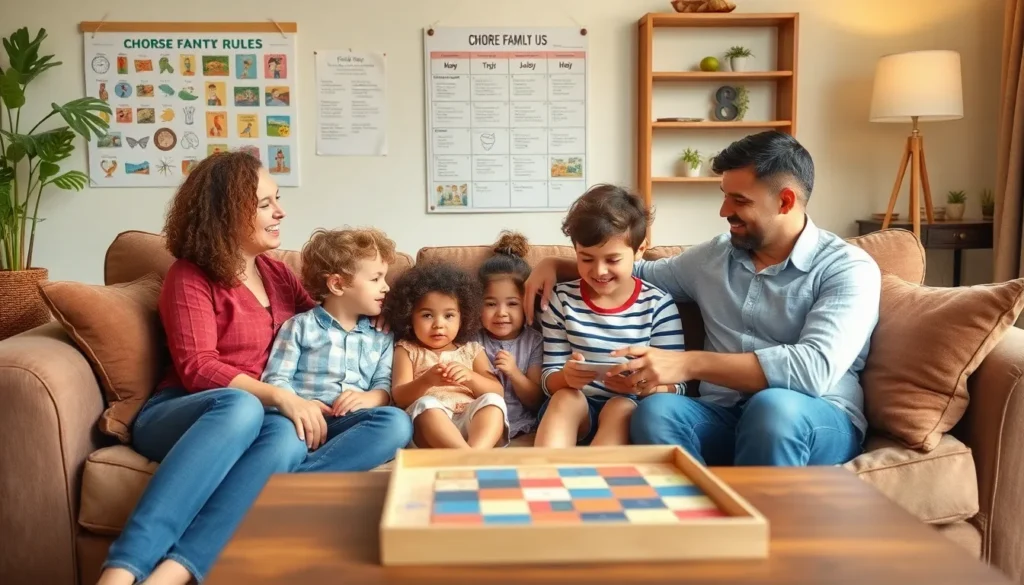
Every family needs a bit of structure, and what better way to establish that than by creating family rules? Think of them as the secret sauce that keeps the chaos at bay while adding a dash of harmony to daily life. Sure, rules might sound a bit boring, but they can actually be the foundation for fun and laughter—like the time Dad declared that socks and sandals are strictly forbidden during family game night!
Understanding Family Rules
Family rules serve as essential guidelines for behavior, fostering a structured environment that promotes harmony. Their purpose extends beyond mere restrictions, influencing how families interact and nurturing a positive atmosphere.
Importance of Family Rules
Establishing family rules creates a framework for respect and responsibility. They clarify expectations, ensuring that everyone understands their role. Rules help to manage conflicts, providing a reference point for discussions. Through consistency, families cultivate trust and stability. Their presence can significantly decrease misunderstandings, enabling smoother daily interactions.
Benefits for Children and Parents
Family rules benefit both children and parents significantly. For children, consistent rules foster a sense of security and teach essential life skills, such as accountability and decision-making. Parents experience reduced stress as rules minimize chaos and create predictable routines. Open communication surrounding rules encourages collaboration, strengthening family bonds. Moreover, rules instill discipline, promoting behaviors that align with family values.
Steps for Creating Family Rules

Creating family rules involves everyone in the household. Engaging all members fosters collaboration and ensures everyone feels valued. Parents should schedule a family meeting to discuss potential rules. During the meeting, each family member can voice their thoughts on what rules are important. This collective process encourages buy-in and reinforces family unity.
Setting guidelines requires clarity and specificity. Vague rules lead to confusion and inconsistencies. Each rule should be straightforward and comprehendible for all ages. Examples include “no yelling inside” rather than simply “be quiet.” Defining positive behaviors helps reinforce desired actions. For instance, rather than focusing on what not to do, emphasize desirable alternatives, such as “ask before taking someone else’s things.” Clear definitions enhance understanding and simplify adherence.
Types of Family Rules
Family rules can categorize into several types to ensure a healthy and functional home environment.
Safety Rules
Safety rules focus on protecting family members from harm. Examples include wearing seatbelts in the car and not running indoors. Establishing fire safety protocols, like having a family meeting place, is vital. Additionally, using childproof locks and harmful substance storage prevents accidents. Prioritizing these rules helps create a secure setting for everyone.
Behavioral Expectations
Behavioral expectations clarify how family members should treat one another. Examples include showing respect during conversations and handling conflicts peacefully. Encouraging good manners at the dinner table promotes positive interactions. Prioritizing honesty and accountability builds trust among family members. Establishing these behavioral guidelines fosters a supportive and nurturing atmosphere.
Responsibilities and Chores
Responsibilities and chores establish a sense of contribution among family members. Assigning age-appropriate tasks ensures everyone participates. Examples might include cleaning their rooms or setting the table for dinner. Sharing responsibilities teaches teamwork and cooperation. Developing a chore chart can provide clarity on expectations and promote accountability. Creating these rules strengthens family bonds through collaboration.
Enforcing Family Rules
Enforcing family rules requires commitment and consistency. Families operate best when members apply rules uniformly and fairly. Every household member should receive the same treatment regarding rule enforcement. This consistency fosters trust and encourages adherence to family expectations. Clear communication about rules simplifies understanding and alignment. Ensure that family members know that rules apply equally, regardless of circumstances. Fairness strengthens unity and reinforces cooperation among members.
Consistency and Fairness
Consistency influences how family rules function in daily life. When rules remain constant, family members find it easier to follow them. Parents should demonstrate the same behavior expected from children, modeling respect and accountability. Flexibility remains important during exceptional situations, but families must strive to uphold rules most of the time. This practice instills stability and predictability. Reinforcing expectations helps cultivate an environment of mutual respect. As members witness fair treatment, they develop a stronger sense of belonging.
Consequences for Breaking Rules
Consequences play a crucial role in enforcing family rules. Clearly defined repercussions for rule-breaking reinforce accountability. Families should discuss these consequences together during rule-setting, ensuring everyone understands the reasoning behind them. Appropriate consequences vary based on age and maturity levels. Parents must consistently apply these outcomes, promoting learning through actions. For instance, losing privileges for breaking a rule teaches responsibility. Ultimately, established consequences empower family members to make better choices over time. Adhering to this structure strengthens family dynamics and reinforces positive behavior.
Adjusting and Revisiting Rules
Family rules should not remain static. Regular assessment ensures rules stay relevant and effective.
When to Reassess Family Rules
Regular intervals can provide opportunities to revisit family rules. Significant life events like moving, starting school, or changes in family dynamics often trigger necessary updates. Involving every family member during reassessment fosters ownership and transparency. Not all rules will remain applicable as children grow or circumstances evolve. Conversations about changing needs help to clarify and redefine expectations.
Adapting to Changing Circumstances
Changing circumstances may significantly impact family dynamics. For instance, welcoming a new family member can necessitate adjustments in existing rules. Re-evaluating rules after major events ensures that everyone’s voice is heard and respected. Adapting rules for different developmental stages supports positive behavior and personal growth. It promotes flexibility in addressing emerging needs and expectations. Encouraging open discussions about these transitions builds a collaborative environment, strengthening family bonds.
Creating family rules is a vital step in fostering a harmonious home environment. These guidelines not only clarify expectations but also promote respect and responsibility among family members. By involving everyone in the rule-setting process and ensuring clarity, families can establish a framework that encourages positive behavior and collaboration.
Regular assessment of these rules keeps them relevant and effective as family dynamics evolve. Open communication about changes strengthens bonds and fosters a sense of ownership. When families commit to consistent enforcement and appropriate consequences, they empower each member to make better choices. Ultimately, well-defined family rules cultivate a nurturing atmosphere that supports growth and unity.

